


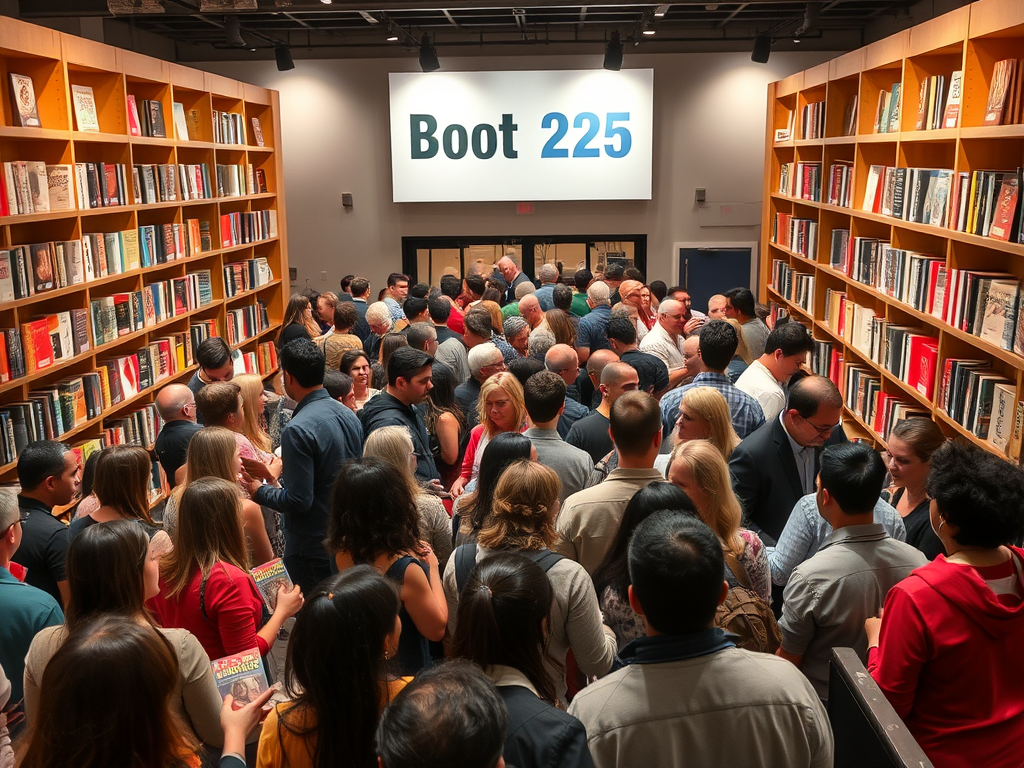
It is 3 a.m., and sleep refuses to come. The weight of recent experiences presses against my mind. The voices of fellow authors resounded in me. The stories they shared, the collective passion that filled Boot 225 at the Los Angeles Times Festival of Books, resounded.
More than 20 authors converged in that space. Each with a different journey, a distinct motivation, and an entirely unique approach to crafting their work. Some spoke about their struggles, others about the creative forces that drove them. Yet all had something in common, an unshakable dedication to writing. Watching them, I wondered: When do they actually write? How do they harness productivity to make such an impact in the book industry?
The Power of Early Hours
For many writers, the early morning offers a sanctuary—a time when distractions are few and the mind is refreshed. After a well-rested night, words flow more freely, ideas solidify, and structure emerges with clarity. Morning productivity is often linked to:
- Mental clarity—a rested mind processes ideas efficiently.
- Quietude—minimal interruptions allow for deep thinking.
- Spiritual renewal—for those who write from faith, early hours offer a sacred space for reflection and divine inspiration.
Writing in the Midst of Exhaustion
The drive home from the festival was long—two hours of fatigue pressing against my body. The pacing, the interactions, the sheer intensity of standing among fellow writers left me drained. I ate lightly, surrendered to sleep, but found myself fully awake just four hours later, staring at the ceiling.
My mind retraced every conversation, every story told in Boot 225. I thought about how diverse each author was. We have authors who prop themselves up in bed to write. Others sit stiffly at their desks, or lounge comfortably in a café, each finding their own rhythm. They wrote at different times, under different conditions, yet all produced work that resonated beyond their own experiences.
Productivity in Moments of Challenge
Some of the most powerful writing emerges from struggle. When faced with emotional, mental, or spiritual turbulence, words become a vessel to process, express, and heal. Poetry often flows in moments of heartbreak, reflection, or revelation. Ms. Garner, the author of “Give me Back my Memory,” suffered a bad divorce that nearly crippled her mentality. For four years, she was completely removed from who she was and placed in a cubicle of mental insubordination. She started operating in the cloud of forgetfulness. This situation progressed. Eventually, she realized that her cognition had deteriorated. It was the day she was jerked off her cloud. She landed on her kitchen table, picked up a pen and paper, and started to write about her divorce., She explored the causes, reality, the consequences, and the ways to heal as a stronger person. Garner explains, “Writing is not just an act of creation but a cultivation of survival. It is a way to make sense of the intangible.
There have been nights when sleep was impossible until thoughts were poured onto paper. Writing serves as a release, a necessary catharsis, transforming unspoken emotions into something tangible.
The Discipline of Assigned Writing
It is striking that most authors I listened to stated that God instructed them to write a book. They tried to ignore the call to write. But the reminder calls persisted; they had no choice but to start writing. To their amazement, it was easier than they expected. Convincing that beyond inspiration, there exists a different level of productivity—the kind born from discipline. Some writers thrive when given an assignment, when external forces set expectations that demand results. Regardless of the time, the stakes, or the fatigue, they produce. Structure provides focus, pushing creativity beyond even when inspiration feels distant.
A Collective Truth Among Writers
Reflecting on the festival, I realize that productivity is not bound by a single formula. Each writer finds their own rhythm. Authors like me choose to write in the serenity of the morning. Others write when in emotional turmoil, and others only when deadlines demand action. What matters is not when they write, but that they write.
No matter the hour, writing remains a vessel that translates thoughts, emotions, and challenges into words that inspire, heal, and transform.


Leave a reply to Valerie Writes Cancel reply